
A call comes in to a Los Angeles County emergency communications center. A paramedic unit is needed for a cardiac event. Another call follows seconds later for a multi-vehicle collision on a crowded freeway. Dispatchers have only moments to assess the situation, send the right resources, and maintain communication with crews already on the road.
In those situations, the technology behind the desk matters just as much as the people operating it. Modern dispatch consoles allow emergency communications centers to coordinate multiple agencies, manage radio traffic, and keep EMS teams connected when seconds count.
In California, particularly in large and complex areas such as Los Angeles County, dispatch centers rely on powerful dispatch console systems capable of handling large volumes of calls and integrating radio, data, and mapping applications into a single workspace. These platforms form the backbone of 911 dispatch consoles, allowing EMS teams, firefighters, and law enforcement to respond quickly and stay coordinated in the field.
Two Outstanding Fire Dispatch Console Platforms
Two platforms frequently used in public safety communications environments across the state are Motorola Solutions’ Avtec Scout™ and CTI Products Avtec Scout™. Both have become well-known options for agencies looking to modernize their public safety dispatch consoles while maintaining reliable radio connectivity.
Motorola Solutions’ Avtec Scout™
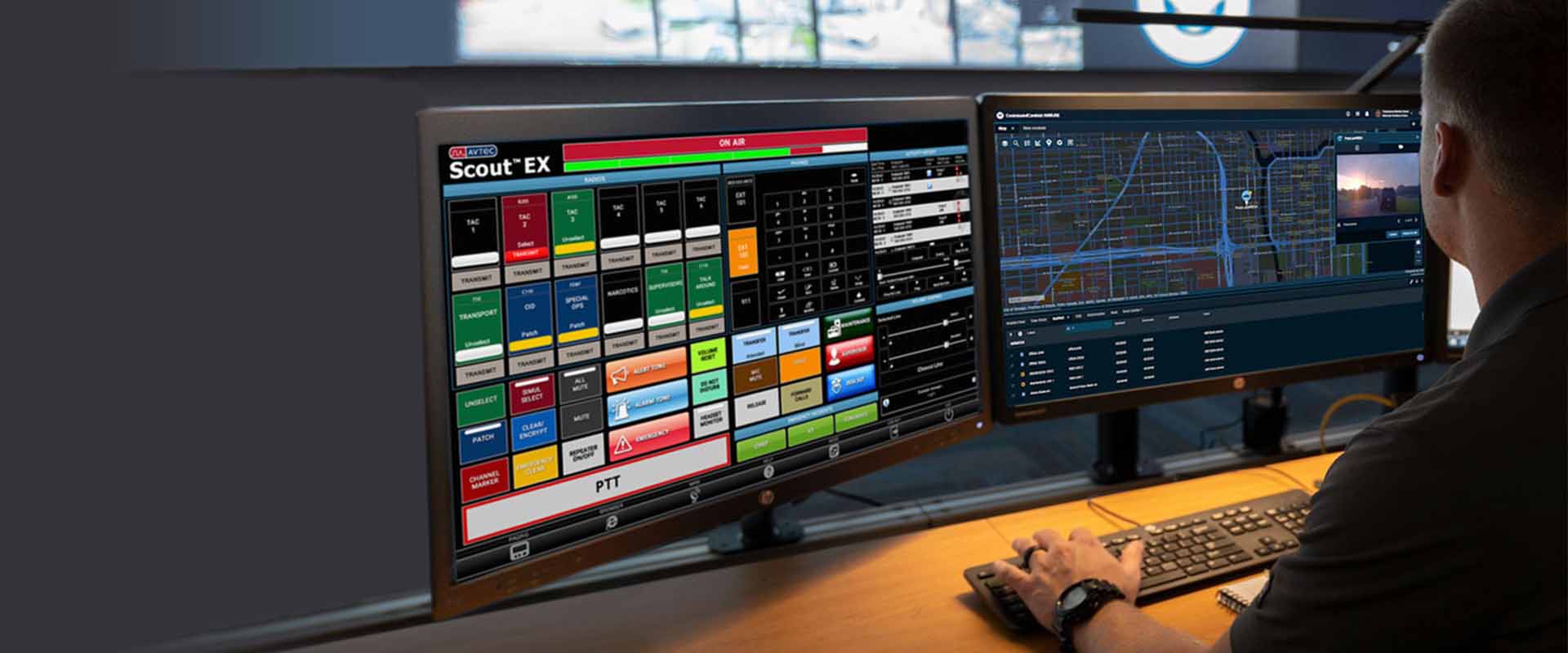
Motorola Solutions’ Avtec Scout platform has become a common presence in many public safety communication centers across the United States, including those supporting EMS operations in California. Designed specifically for mission-critical environments, Avtec ScoutTM integrates radio communications, telephone systems, and IP networks into a single interface.
For dispatchers managing emergency calls, that kind of integration makes a real difference. Instead of switching between multiple systems, operators can handle radio traffic, monitor talk groups, and communicate directly with responders from a single console.
Another reason Motorola’s Avtec ScoutTM remains popular among EMS dispatch centers is its flexibility. Some agencies operate large regional communications centers, while others support smaller city departments. Scout can scale to either environment, making it adaptable for different operational needs.
Reliability is also a major factor. Public safety dispatch consoles must remain operational around the clock, and Avtec ScoutTM is built with redundant servers and failover capabilities to ensure communications stay online even during technical issues. For EMS teams responding to medical emergencies across Southern California’s dense urban areas and sprawling suburbs, uninterrupted communication is essential.
Because the platform supports multiple radio networks and communication technologies, dispatchers can coordinate with fire departments and law enforcement agencies when incidents require a multi-agency response. In many cases, the fire dispatch console, EMS, and law enforcement communications systems operate side by side within the same environment.
CTI Products RadioPro™
Another widely recognized platform used by California EMS is CTI Products’ RadioPro. While it serves many industries, RadioProTM has gained particular traction in emergency communications environments where agencies want to extend radio capabilities beyond traditional console hardware.
RadioProTM connects radio systems with computer networks, allowing dispatchers to access radio communications through desktop consoles, mobile applications, or web-based platforms. That flexibility can be especially useful for agencies operating in large geographic response areas.
For EMS teams across California, the ability to monitor and communicate through multiple access points can add an extra layer of operational awareness. Supervisors may monitor radio traffic from command vehicles, and communications staff can maintain situational awareness even when they are not sitting directly at a traditional dispatch desk.
In large urban areas such as Los Angeles, the EMS agencies tend to liaise with the fire and police departments. Communication systems must be integrated when incidents involve firefighters, paramedics, and law enforcement responding simultaneously. Communication channels can be bridged using platforms such as RadioProTM, which integrates radio networks and digital applications across the entire dispatch environment.
As emergency communications technology continues evolving, systems like RadioProTM demonstrate how dispatch console systems are expanding beyond traditional radio-only designs to include broader digital connectivity.
Why Reliable Dispatch Technology Matters for EMS
In the case of EMS agencies, effective communication is a direct factor in patient outcomes. Paramedics use dispatchers to receive real-time information, directions, and communication with hospitals or other response teams.
This is the reason why 911 dispatch consoles are constructed with redundancy, failover, and well thought interfaces that assist dispatchers to handle multiple radio channels simultaneously. These systems need to keep on their tasks without failure even when the number of calls surges like in the case of major incidents or natural disasters.
The situation in California is a challenge. The population density, traffic patterns and geographic diversity of the state present challenging conditions of emergency communications. In some areas of Southern California, EMS teams must travel fast through the city streets, freeways, mountainous regions, and coastal communities. All in a single shift.
Well-designed public safety dispatch consoles help maintain order in all that complexity. Dispatchers can monitor multiple agencies, track units in real time, and relay critical information to responders without delay.
Los Angeles County and Southern California Dispatch Consoles
Los Angeles County alone serves over ten million people and receives millions of visitors annually. Dispatchers need to handle massive call volumes and coordinate between fire departments, EMS providers, law enforcement agencies, and regional mutual-aid partners.
For dispatch centers serving Southern California, selecting the right dispatch consoles is not just about features; it is about reliability under pressure.
Modern consoles such as Avtec Scout™ and CTI RadioPro™ allow agencies to integrate radio communications with mapping tools, CAD platforms, and digital data streams. The result is a unified workspace where dispatchers can see the bigger picture while directing emergency resources.
This kind of integration is increasingly important as agencies adopt new technologies, including broadband communications, mobile data systems, and real-time situational awareness tools.
SJM Industrial Radio: Supporting Public Safety Communications in Southern California
Behind every emergency response is a team of professionals and a network of professional equipment working quietly in the background. Dispatchers guide units to the scene. Communications technicians maintain the infrastructure. And reliable systems keep everyone connected.
That is where experienced communications providers like SJM Industrial Radio make a significant difference. SJM Industrial has supported mission-critical wireless communication systems across Los Angeles County and Southern California for over 30 years. Their team works with agencies and organizations that rely on dependable two-way radio systems, advanced dispatch console systems, and integrated communication networks.
From modernizing fire dispatch console environments to supporting the broader infrastructure behind 911 dispatch consoles, SJM helps ensure that the technology behind every emergency response remains reliable and ready when it matters most.
In emergency communications, there is no room for uncertainty. The right public safety dispatch consoles provide the clarity, coordination, and resilience needed to keep responders connected and communities protected through every call that comes across the line.
Trust SJM Industrial Radio for Your EMS Communications!