
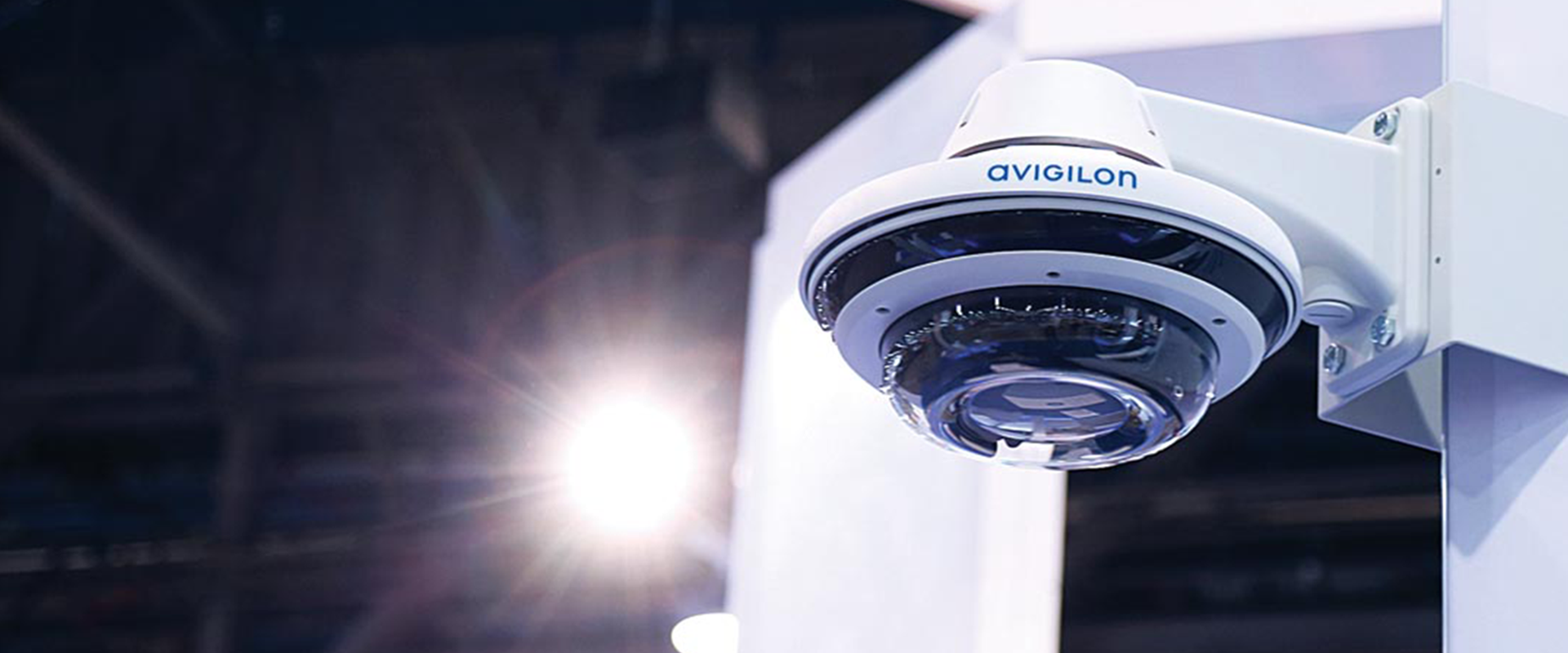
All they had on the suspect was the license plate of a car that was registered to him, and a tip that he was going to be at the stadium for this afternoon’s game. By kickoff, security teams had already flagged the vehicle as it entered a nearby parking structure. Security cameras confirmed the plate automatically. Software traced the car’s movement from one entrance to another. Inside the stadium gates, the facial-matching tools quietly compared live video against a watchlist. When the individual stopped in a restricted corridor, the system issued a silent alert to all security personnel of his location before anyone ever laid eyes on him. What once took hours of searching through dense crowds is now done quietly and quickly, behind the scenes, using high-res cameras and AI-powered video management.
That is the difference between traditional cameras and a modern AI-driven video management system, such as those provided by Avigilon video security. Today’s platforms do not just record video. They interpret it. They generate usable data. And they give security teams information fast enough to act on it, rather than review it after the fact.
Why Smart Video Surveillance Matters More Than Ever
Security expectations have changed. Facilities are larger. Threats move faster. And the volume of video generated by modern cameras would overwhelm any human team trying to monitor it manually.
This is where AI-powered industrial-grade video monitoring makes the difference. Instead of relying on someone to stare at a screen for 8 hours, intelligent systems continuously analyze patterns. They detect anomalies. They compare activity to predefined rules. They generate alerts only when something needs attention.
The result? Faster response times. Fewer missed incidents. Clearer evidence when questions arise.
The newest platforms go even further. They recognize specific object types. They identify behaviors that do not fit normal patterns. They track movement across multiple camera views. They even generate business intelligence insights from everyday activity. What used to be just “video footage” is now structured data.
So, what exactly are these systems capturing and tracking? Let’s break it down.
The Key Data Points AI Video Systems Capture
Modern surveillance is built around analytics. Behind every camera is an engine that categorizes, measures, and tags what it sees. Here are some of the most valuable data points generated by an AI-driven video management system.
1. Object Identification and Classification
At its core, AI video distinguishes what it’s looking at.
Person vs. Vehicle vs. Animal
The system differentiates between humans, cars, trucks, motorcycles, and even animals. That means a stray dog will not trigger the same alert as a person entering a restricted zone. Filtering by object type dramatically reduces false alarms.
License Plate Recognition (LPR)
Cameras positioned at entry and exit points can automatically capture and log plate numbers, even when vehicles are moving quickly. Each plate becomes searchable metadata, tied to time stamps and camera locations.
Facial Matching
In authorized environments, live video can be compared against approved or restricted databases. This supports access control, watchlist monitoring, and rapid identity verification.
Package Monitoring
Systems can detect when a parcel appears in a monitored area or disappears. That matters in corporate offices, distribution centers, and public venues where unattended items pose risks.
Weapon Detection
Advanced analytics can identify the visible presence of firearms or edged weapons. These alerts occur in seconds, giving security teams precious time to respond.
2. Behavioral and Motion Analytics
Beyond identifying objects, AI interprets how those objects behave.
Virtual Boundary Alerts
Security teams can create invisible lines on the screen. If someone crosses that boundary — whether entering a restricted warehouse aisle or moving through a secured perimeter — the system sends an alert.
Loitering Recognition
If a person or vehicle remains in a defined area longer than expected, the software flags it. This is particularly useful in parking structures, loading docks, and sensitive access points.
Abandoned or Removed Items
If an object is left behind in a public space, the system detects it. Likewise, if equipment disappears from a monitored zone, the change is recorded and flagged.
Unusual Movement Patterns
Running in a restricted hallway. Sudden aggressive motion. Erratic activity in a normally calm area. AI analyzes motion patterns and identifies behavior that falls outside established norms.
Person-Down Detection
By evaluating posture and movement, systems can recognize when someone has fallen or collapsed. In large facilities, this allows for immediate medical response without waiting for a passerby to report it.
3. Operational and Business Intelligence Metrics
Security video is not only about threats. It also produces operational insights.
People Counting and Occupancy Levels
Cameras track how many individuals enter and exit a building. Real-time occupancy data supports safety compliance and crowd management.
Queue Monitoring
The system can measure wait times in lines and notify managers when thresholds are exceeded. In retail or event environments, this improves staffing decisions.
Activity Heatmapping
By analyzing foot traffic patterns, AI highlights high-activity and low-activity areas within a space. Facility managers use this data to optimize layouts and improve flow.
Dwell Time Analysis
The software measures how long individuals remain in specific zones. In retail environments, this provides insights into display effectiveness. In secure facilities, extended dwell time in sensitive areas may trigger a review.
4. Safety and Compliance Monitoring
In industrial environments, especially, compliance matters.
PPE Detection
Industrial grade video monitoring can identify whether individuals are wearing required safety gear, such as goggles, hard hats or reflective vests. Alerts can be generated when someone enters a designated area without proper equipment.
Slip-and-Fall Recognition
AI detects sudden falls and prolonged inactivity on the ground. Immediate alerts help reduce response time and improve employee safety outcomes.
5. Searchable Forensic Metadata
Perhaps the most transformative capability is the ability to make video searchable.
Attribute-Based Search
Need to find “a red pickup truck” or “a person carrying a backpack”? Instead of scrubbing through hours of footage, operators type the criteria into the system. Tagged metadata narrows results in seconds.
Multi-Camera Tracking
AI can automatically track an individual’s movements across multiple camera views. This reconstructs events quickly and accurately, providing a clear timeline.
Taken together, these new capabilities shift video from passive recording to active intelligence. Cameras become sensors. Footage becomes data. Security teams gain the visibility they have never had before. But all of it depends on thoughtful design and proper deployment.
Why System Design and Installation Matter
The technology is powerful. But it is only as effective as the manner in which it is engineered.
An experienced integrator understands the system’s capabilities. They evaluate your facility layout, your operational risks, and your compliance requirements before recommending equipment. They ensure that the AI video management system is configured to align with your exacting goals, not just installed, switched on, and left running.
That is where SJM Industrial Radio in the Los Angeles area stands apart. Their team specializes in mission-critical communication and surveillance environments. They understand industrial facilities, complex campuses, and high-demand operational settings. From equipment selection to network configuration to final testing, they approach every project with precision. More importantly, they do not treat AI as a buzzword. They engineer systems that work. Systems that deliver reliable analytics, accurate alerts, and meaningful data your team can actually use.
Because at the end of the day, video surveillance isn’t about cameras mounted on walls. It’s about information. The right information. Delivered at the right time. And when that happens, security teams move from reacting after the fact to always staying one step ahead.
Trust SJM Industrial to Give You VISION!
Artificial intelligence has fundamentally changed what video management and monitoring systems can do. From cloud-native platforms and proactive analytics to natural-language searches and operational insights, today’s solutions are more innovative, faster, and more capable than ever before.
But technology alone is not enough. The real impact comes from pairing advanced AI-driven video management systems with expert guidance, thoughtful design, and professional installation like you receive from SJM Industrial Radio. When those pieces come together, video surveillance becomes more than just a security measure. It becomes a strategic asset.
An Avigilon video management system, designed and installed by SJM Industrial Radio, enhances security. Don’t settle for less than the best when it comes to AI video security management software and video analytics. Streamline security operations and achieve maximum efficiency today with an integrated voice and video solution from SJM Industrial Radio.
Contact SJM Industrial TODAY!