
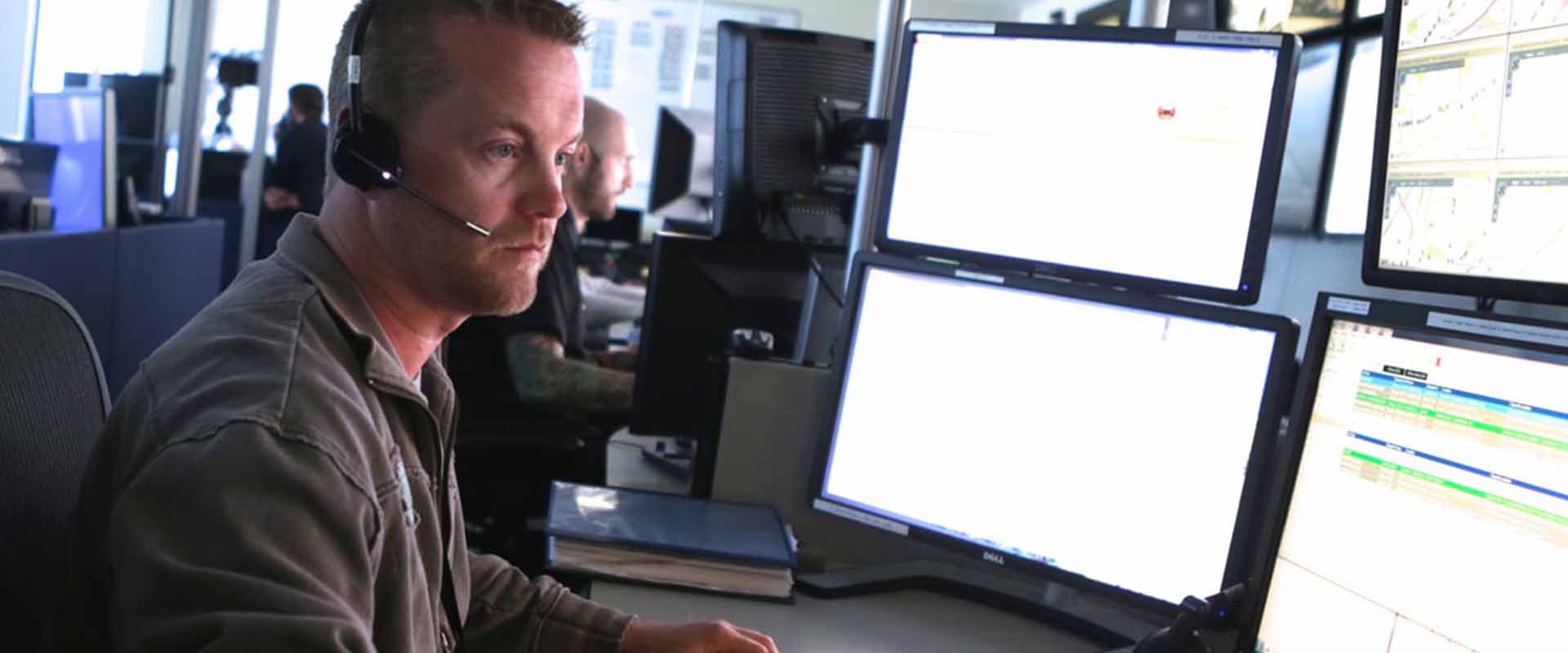
There is a reason certain names come up again and again in critical communications. When a system must operate without hesitation, day or night, agencies and organizations tend to lean toward what has already proven itself in the field. That is often where Motorola enters the conversation. Still, not every operation looks the same. A large municipal agency will have very different needs than a private industrial site or a growing transportation team.
So, the question is not simply whether Motorola is good. It is how do Motorola dispatch consoles compare to other console brands under real-world demands. The answer is more nuanced than a simple ranking, especially given the expectations for modern dispatch consoles.
What Sets Motorola Apart in Dispatch Environments
Motorola Solutions has established a reputation for reliability. That reputation was not created in one day. It is the result of years of implementation in conditions where failure is not an option. Just consider big-scale public safety systems, emergency response planning, and intricate infrastructure systems.
Systems like the MCC 7500e and the CommandCentral motorola dispatch console platforms are designed with that level of pressure in mind. Many agencies rely on them for 911 dispatch consoles because uptime is not a luxury. It is the baseline. Motorola often promotes a five-nines availability standard, which translates to extremely minimal downtime across a full year.There is also a noticeable emphasis on integration. Motorola consoles work seamlessly with the company’s P25 and MOTOTRBOTM radio systems. For organizations already invested in that ecosystem, the experience feels cohesive. Audio, encryption, call handling, and logging all operate within a tightly connected framework.
That level of integration can make a difference in high-stress moments. Dispatchers do not have to jump between disconnected systems. Information flows in a way that feels immediate and organized, which is exactly what public safety dispatch consoles are expected to deliver.
How Other Brands Approach the Same Challenges
While Motorola’s CommandCentral AXS and 7500E Radio Dispatch Console tend to lead in tightly integrated environments, other manufacturers take a slightly different path.
Avtec Scout
Avtec, which is now a Motorola company, established its reputation upon flexibility. The Avtec Scout platform has been said to be vendor-agnostic. Practically speaking, that means it can interface with a broader array of radio technologies, including Harris and Kenwood systems. That flexibility can be useful to agencies that use mixed fleets or are switching technologies.
Zetron
Zetron also contributes another strength. Many users consider its interface to be one of the most user-friendly in the industry. In long shifts, that is more than people think. A well-designed interface prevents fatigue and helps dispatchers remain focused. This “ease-of-use” can especially impact performance in a police and fire dispatch console environment, where timing and clarity are everything.
Telex and Kenwood
Telex and Kenwood solutions tend to appeal to organizations that need reliable communication without the added cost of high-end proprietary features. These systems often focus on Radio over IP functionality, which allows for efficient communication across networks without requiring the same level of investment as more complex platforms.
Each approach reflects a different priority. Some emphasize integration, others flexibility, and some focus on cost efficiency.
Factors That Distinguish the Motorola Consoles
Motorola consoles are differentiated in more than just superficial features. The differences are reflected in how the system will behave under pressure, how it will integrate with other tools, and how dispatchers can depend on it when it is needed most.
Price to Value Considerations
Cost is rarely the only consideration, but it is invariably part of the conversation. Motorola’s dispatch console systems are usually at the upper end of the market. Installations of complex systems can cost more than $50,000, depending on the extent and level of customization. For large agencies, such an investment tends to align with the performance and support they expect.
Nevertheless, not all organizations require such complexity. Smaller operations, private enterprises, and some industrial users might find that other brands can provide what they require at a more convenient price point.
Telex and other providers of the same type tend to be of good functionality at non-premium rates. The trade-off is usually less sophisticated functionality or reduced compatibility with specific radio ecosystems. It is all about knowing what the mission really demands. It is not worth adding costs by paying for features that will not be used. On the other hand, corner-cutting in a mission-critical setting may pose risks that far outweigh mere financial savings.
Interoperability and System Flexibility
One of the more important differences between Motorola and its competitors shows up in interoperability. Motorola systems perform exceptionally well within their own ecosystem. When everything is built around Motorola radios and infrastructure, the experience is smooth and consistent. That is a major advantage for agencies that want a unified solution.
Avtec Scout (by Motorola), on the other hand, is often recognized for its ability to bridge different technologies. It allows organizations to connect multiple radio platforms without being locked into a single vendor. That flexibility can be especially useful during system upgrades or when coordinating across jurisdictions.
For organizations managing diverse communication tools, vendor-agnostic design can simplify operations. It also creates room for future expansion without requiring a complete system overhaul.
Technology and User Experience
Dispatch environments are evolving. Traditional hardware-based systems are gradually giving way to software-driven platforms that offer greater mobility and scalability.
Motorola has been heading that way with browser-based solutions such as CommandCentral. These platforms minimize reliance on physical infrastructure and enable more flexible deployment. This can simplify scaling for an expanding business.
Zetron remains unique in terms of user experience. Its interfaces have been praised for being user-friendly and easy to navigate. The dispatchers can handle information quickly without being overwhelmed by cluttered screens or complicated workflows.
When shifts run long, and call volumes stay high, those design choices matter. A well-structured interface helps maintain accuracy and reduces the likelihood of errors.
Reliability in High-Stakes Situations
Reliability is where Motorola often sets itself apart. In mission-critical environments such as 911 dispatch consoles, there is very little tolerance for failure. Systems must perform consistently, even under heavy load or during unexpected events. Motorola has built its reputation around meeting those expectations.
That does not mean other brands are unreliable. Many offer strong performance and dependable communication. However, Motorola is often the first choice when the margin for error is essentially zero. For fire dispatch console operations and large public safety networks, that level of confidence can carry significant weight in decision-making.
Choosing the Right Fit for Your Operation
There is no single answer that fits every organization. The right choice depends on how the system will be used, what infrastructure is already in place, and how the organization plans to grow.
Motorola stands out for large, mission-critical deployments that require deep integration and advanced capabilities. It is often the go-to for agencies that cannot afford downtime and need a fully unified communication environment.
Meanwhile, platforms such as Avtec Scout and Zetron are also becoming more attractive. They offer flexibility, ease of use, and in certain instances, a more friendly price tag. In some organizations, such factors may be as important as premium features.
Ultimately, the choice of dispatch consoles is based on matching technology with the mission. The ideal console system is one that is supportive of its users, maintains clear communication, and provides support when it is needed most.
You Can Trust SJM Industrial Radio for Your Dispatch Console Needs
At SJM Industrial Radio, we have two driving concerns: 1) Personalized customer service and 2) Our clients’ complete satisfaction.
Tailored to your operational requirements, our products and services encompass diverse solutions crafted to meet your specific needs. SJM Industrial boasts a team of technical experts specializing in industrial telecommunications solutions. They dedicate time and effort to deliver exemplary solutions and service from the project’s initiation to completion.
Moreover, our systems incorporate the latest MOTOTRBO digital technology as well as the public safety P25 technology, ensuring reliability even in demanding on-site conditions. We collaborate with you to select the ideal system for your operations, saving time and enhancing productivity and safety.
Contact SJM TODAY!